How to Help Prevent Frozen Shoulder: 10 Science-Backed Habits to Keep Your Shoulders Moving
Share
Your Shoulder Doesn’t Become “Frozen” Overnight
Most people don’t wake up one morning unable to lift their arm.
Frozen shoulder usually develops quietly.
At first, it may be nothing more than a slight ache when reaching into the back seat of the car. Maybe fastening a bra, putting on a jacket, or reaching into a high kitchen cabinet feels a little awkward. Because the discomfort comes and goes, it’s easy to ignore.
Weeks turn into months.
The shoulder becomes a little stiffer. Daily movements gradually become smaller. Without realizing it, you begin compensating with your neck, back, or opposite arm.
By the time sleep is interrupted or simple tasks become difficult, the shoulder has often been changing for quite some time.
This gradual progression is one reason frozen shoulder can feel so frustrating. It rarely begins with a dramatic injury. Instead, it often develops through a combination of inflammation, reduced movement, and prolonged stiffness.
The encouraging news is that while no strategy can guarantee prevention, research suggests there are practical habits that may help maintain healthy shoulder mobility and reduce some of the known risk factors associated with adhesive capsulitis.
The goal isn’t to “bulletproof” your shoulders.
It’s to keep them moving well—for work, exercise, hobbies, and the countless small movements that make everyday life easier.
What Is Frozen Shoulder?
Frozen shoulder, medically known as adhesive capsulitis, is a condition in which the connective tissue surrounding the shoulder joint gradually becomes painful and restricted.
Unlike muscle soreness that improves after a few days, frozen shoulder limits the joint itself.
According to the American Academy of Orthopaedic Surgeons (AAOS), the condition typically develops through three overlapping stages:
- Freezing – Pain gradually increases, especially during movement and at night.
- Frozen – Pain may become less intense, but stiffness significantly limits shoulder motion.
- Thawing – Movement slowly returns, although recovery may take many months.
For many people, the biggest challenge isn’t pain alone.
It’s losing the ability to perform ordinary movements that once required no thought at all.
How Common Is Frozen Shoulder?
Although frozen shoulder isn’t among the most common musculoskeletal conditions, it is far from rare.
Studies estimate that approximately 2–5% of the general population will develop frozen shoulder at some point in their lives.
The risk is considerably higher in certain groups.
People between 40 and 60 years of age are affected most often, and women are diagnosed more frequently than men.
Certain medical conditions also increase the likelihood of developing frozen shoulder. Research has consistently found a strong association with diabetes, where reported prevalence ranges from 10% to 20%, substantially higher than in the general population.
Other factors linked to increased risk include thyroid disorders, prolonged shoulder immobilization after injury or surgery, Parkinson’s disease, and previous episodes of frozen shoulder in the opposite arm.
While not everyone with these risk factors will develop the condition, understanding them helps explain why prevention is less about finding a miracle exercise and more about maintaining healthy movement over time.
1. Keep Your Shoulder Moving Every Day
If there is one habit consistently recommended by orthopedic specialists, physical therapists, and rehabilitation experts, it is surprisingly simple:
Don’t stop moving your shoulder.
Movement doesn’t have to mean lifting heavy weights or completing an intense workout.
In fact, everyday movement is often enough.
Reaching overhead to place dishes in a cabinet.
Putting on a backpack.
Stretching after sitting at your desk.
Swinging your arms while walking.
These ordinary activities gently move the shoulder through different ranges of motion, helping prevent long periods of inactivity.
One of the strongest known risk factors for frozen shoulder is prolonged immobilization.
This is why the condition sometimes develops after shoulder surgery, fractures, or injuries that require wearing a sling for several weeks.
When movement decreases significantly, the shoulder capsule may gradually become tighter over time.
Of course, this doesn’t mean ignoring medical advice.
If you’ve recently had surgery or suffered an injury, always follow your physician’s rehabilitation plan.
The goal is appropriate movement—not premature movement.
2. Don’t Ignore Early Stiffness
Frozen shoulder rarely begins with severe pain.
For many people, the earliest warning sign is simply that the shoulder feels “different.”
You may notice that reaching behind your back takes a little more effort than it used to.
Your shoulder feels tight after working at a computer all afternoon.
Stretching overhead becomes uncomfortable, even though there wasn’t any obvious injury.
These subtle changes are easy to dismiss.
After all, everyone experiences stiffness from time to time.
The difference is persistence.
If shoulder stiffness continues for several weeks—or if your range of motion seems to be gradually decreasing—it deserves attention.
Addressing mobility early may help prevent minor restrictions from becoming larger functional problems later.
Think of stiffness as your body’s way of asking for movement—not necessarily more intensity, but more consistency.
3. Sitting All Day Affects More Than Your Back
When people think about desk jobs, they usually think about neck pain or lower back discomfort.
The shoulders are often forgotten.
Hours spent working on a laptop, driving, or looking at a phone encourage the arms to remain in front of the body for extended periods.
Over time, the muscles across the chest may become tighter, while the muscles responsible for stabilizing the shoulder blades become less active.
This doesn’t directly cause frozen shoulder.
However, it can contribute to reduced shoulder mobility and make everyday movement feel less natural.
If you spend most of the day sitting, try to change positions regularly.
Stand during phone calls.
Reach overhead every hour or two.
Roll your shoulders backward before returning to your keyboard.
Small movement breaks don’t need to interrupt productivity.
In many cases, they simply help your body avoid staying in the same position for too long.
4. Recovery Isn’t Just for Athletes
When people hear the word recovery, they often picture professional athletes sitting in ice baths or using expensive equipment after a competition.
But recovery isn’t reserved for elite sports.
In fact, many people who develop shoulder stiffness have never stepped into a gym.
They work at a computer.
Drive for long hours.
Carry young children.
Paint ceilings.
Garden on weekends.
Or simply spend years repeating the same movements without giving much thought to how their shoulders feel afterward.
The shoulder is one of the most mobile joints in the human body. That mobility allows us to reach overhead, throw a ball, fasten a seatbelt, or lift a suitcase into an overhead compartment.
But mobility comes with a trade-off.
Unlike the hip, which relies on a deep socket for stability, the shoulder depends heavily on muscles, tendons, and connective tissue to stay balanced. When those tissues become overworked or remain inactive for long periods, movement often becomes less efficient.
Recovery, in this context, doesn’t mean repairing damage.
It means giving the shoulder an opportunity to return to a comfortable, relaxed state after the demands of everyday life.
For some people, that might mean taking a short walk after several hours at a desk.
For others, it may involve gentle stretching before bed, applying comfortable warmth, or simply paying attention to posture throughout the day.
These habits may seem small in isolation.
Over months and years, however, consistency often matters far more than intensity.
5. Build a Shoulder Routine You Can Actually Maintain
One of the biggest mistakes people make is waiting until their shoulder hurts before taking care of it.
Healthy shoulders are usually the result of small habits repeated consistently—not occasional bursts of motivation.
You don’t need an hour-long mobility session every evening.
In many cases, 10 to 15 minutes is enough to remind your shoulder to keep moving.
A practical daily routine might include:
- Two or three minutes of gentle shoulder circles.
- A few wall slides or pendulum exercises.
- Stretching the chest after long periods of sitting.
- Light movement for the upper back and shoulder blades.
- Gentle warmth before bed if the shoulder feels stiff after a long day.
Notice that none of these activities are particularly difficult.
That’s intentional.
The best routine is the one you’ll still be following six months from now.
6. Why Heat, Light, and Massage Are Often Used Together
Walk into almost any physical therapy clinic and you’ll notice something interesting.
Treatment rarely relies on a single approach.
Movement is often combined with manual therapy.
Heat may be used before mobility exercises.
Massage may be used to relax surrounding muscles.
The goal isn’t to rely on one intervention.
It’s to create an environment where comfortable movement becomes easier.
This same philosophy has influenced many modern home recovery tools.
Rather than offering only heat or only massage, newer wearable devices often combine several recovery methods into a single routine.
Gentle warmth may help loosen muscles before movement.
Vibration may create a relaxing massage sensation after a long day of repetitive activity.
Red and near-infrared light have also become increasingly common in home recovery devices as research into photobiomodulation continues to expand.
While scientists are still exploring all of the underlying biological mechanisms, studies suggest that specific wavelengths of light may interact with normal cellular processes involved in tissue recovery. The strongest body of evidence currently supports using red light therapy as a complementary recovery modality—not as a replacement for exercise, rehabilitation, or medical care.
Thinking of these approaches as complementary rather than competing often leads to more realistic expectations.
The objective isn’t to “fix” a shoulder in one evening.
It’s to create a recovery routine that feels easy enough to repeat tomorrow.
7. Consistency Is Easier When Recovery Fits Into Everyday Life
One reason healthy habits fade is simple:
They’re inconvenient.
A heating pad has to be plugged in.
A massage appointment requires scheduling.
Stretching is easy to postpone when you’re tired after work.
The more complicated a routine becomes, the less likely it is to survive a busy week.
That’s why many people gradually shift toward recovery tools that fit naturally into activities they’re already doing.
Reading a book.
Watching television.
Answering emails.
Relaxing before bed.
Instead of setting aside extra time, recovery becomes part of time that already exists.
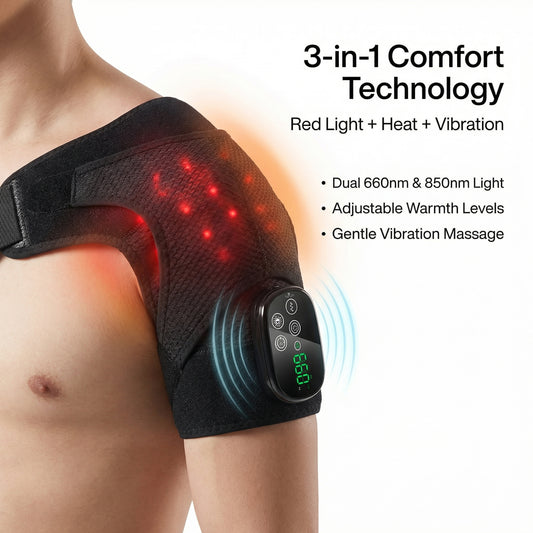
One example is the Nutvrliy Red Light Therapy Shoulder Wrap, designed for everyday shoulder comfort rather than clinical treatment.
Its ergonomic wrap comfortably fits either shoulder while leaving both hands free, making it easy to wear while reading, working at a desk, or winding down in the evening.
Instead of relying on a single feature, the wrap combines several comfort-focused technologies into one wearable design:
- Dual-chip 660nm and 850nm LEDs, delivering both red and near-infrared light across the shoulder area.
- Three adjustable heat settings (45–60°C) that allow users to choose a comfortable level of warmth.
- Three vibration modes designed to create a relaxing massage experience after work, exercise, or prolonged sitting.
- A rechargeable 5000mAh battery with USB-C charging, allowing cordless use around the home.
- Built-in 20-, 30-, and 45-minute timer options, making it easy to incorporate into an evening recovery routine.
Importantly, wearable recovery tools like this are not intended to prevent frozen shoulder on their own.
Instead, they can support the kind of consistent daily recovery habits—movement, relaxation, warmth, and regular shoulder care—that help people stay engaged with their overall wellness routine.
For many people, consistency isn’t about having more discipline.
It’s about making healthy habits easier to repeat.
8. A Simple 15-Minute Daily Shoulder Maintenance Routine
You don’t need a complicated program to take better care of your shoulders.
In fact, the most effective routines are often the simplest.
Here’s an example that fits easily into most evenings:
Minutes 1–3: Gentle shoulder circles and arm swings to restore natural movement.
Minutes 4–7: Light mobility exercises, such as pendulum movements, wall slides, or shoulder blade squeezes.
Minutes 8–15: Relax with gentle warmth or a wearable shoulder recovery wrap while reading, listening to music, or preparing for bed.
The goal isn’t to finish the session feeling exhausted.
It’s to finish feeling comfortable enough that you’ll want to do it again tomorrow.
Because shoulder health isn’t built during one perfect workout.
It’s built through hundreds of ordinary days where you simply keep moving.
9. Some People Need to Pay Even Closer Attention
Frozen shoulder can happen to anyone, but it doesn’t affect everyone equally.
Research has identified several groups who are more likely to develop the condition, making daily shoulder care even more worthwhile.
Adults Over 40
Age alone doesn’t cause frozen shoulder, but the condition becomes significantly more common after the age of 40.
As we get older, connective tissues naturally become less elastic, and people are also more likely to experience periods of reduced activity following injuries, surgery, or other health conditions.
Maintaining regular shoulder movement becomes increasingly important during this stage of life.
People Living With Diabetes
Among all known risk factors, diabetes has one of the strongest associations with frozen shoulder.
Studies suggest that people with diabetes are up to five times more likely to develop adhesive capsulitis than the general population, with reported prevalence ranging between 10% and 20%.
Researchers are still working to understand exactly why this relationship exists. Changes in collagen, inflammation, and blood glucose regulation are all believed to play a role.
For individuals with diabetes, preserving shoulder mobility through regular movement and early attention to stiffness may be particularly beneficial.
People Recovering From Injury or Surgery
Ironically, protecting an injured shoulder can sometimes create another problem.
After fractures, rotator cuff injuries, or shoulder surgery, it’s often necessary to limit movement for a period of time.
However, prolonged immobilization is also one of the most well-established risk factors for frozen shoulder.
This is why orthopedic surgeons and physical therapists often encourage gradual, guided rehabilitation as soon as it is medically appropriate.
The timing matters.
Moving too early may interfere with healing.
Waiting too long may increase stiffness.
Following your rehabilitation plan is usually the safest approach.
Desk Workers and Remote Professionals
You don’t have to be injured to lose shoulder mobility.
Modern work has quietly changed how our shoulders move.
Many office workers spend eight or more hours each day with their arms positioned in front of the body while typing, using a mouse, or looking at a laptop.
Over months and years, this repeated posture may contribute to reduced thoracic mobility, tighter chest muscles, and less frequent overhead movement.
While office work itself doesn’t cause frozen shoulder, it can encourage the kind of prolonged inactivity that gradually reduces comfortable shoulder movement.
Sometimes the simplest solution is also the most effective:
Stand up.
Reach overhead.
Move your shoulders through their full comfortable range several times throughout the day.
Shoulder Health Is Built One Day at a Time
People often imagine shoulder problems as dramatic events.
A fall.
A sports injury.
A torn tendon.
But for many people, shoulder stiffness develops much more quietly.
It’s shaped by ordinary days.
The meetings that last too long.
The weekends spent painting the house.
The months of wearing a sling after an injury.
The habit of ignoring a shoulder that feels “just a little tight.”
Healthy shoulders rarely come from one perfect stretch or one expensive piece of equipment.
They’re usually the result of hundreds of small decisions repeated consistently.
Choosing to move instead of staying in one position for hours.
Taking five minutes to loosen stiff muscles after work.
Supporting recovery before discomfort becomes persistent.
That’s a much more realistic definition of prevention.
When Should You See a Healthcare Professional?
Daily recovery habits are valuable, but they aren’t a substitute for a proper medical evaluation.
Seek professional advice if you notice any of the following:
- Shoulder pain that lasts longer than a few weeks without improving.
- A steady loss of shoulder movement that interferes with everyday activities.
- Severe pain following a fall or other traumatic injury.
- Fever, redness, or significant swelling around the shoulder.
- Numbness, tingling, or weakness extending into the arm or hand.
- Night pain that becomes progressively worse despite rest and self-care.
The sooner the underlying cause is identified, the sooner an appropriate treatment plan can begin.
Not every stiff shoulder is frozen shoulder.
Conditions such as rotator cuff tears, osteoarthritis, bursitis, and cervical spine disorders can produce similar symptoms but require different approaches.
Frequently Asked Questions
Can Frozen Shoulder Be Completely Prevented?
Not necessarily.
There is currently no proven method that can guarantee frozen shoulder will never develop.
However, maintaining shoulder mobility, avoiding unnecessary immobilization, following rehabilitation advice after injury or surgery, and addressing stiffness early may help reduce known risk factors.
Think of prevention as lowering risk rather than eliminating it entirely.
Is Exercise Enough to Prevent Frozen Shoulder?
Exercise is important, but consistency matters more than intensity.
A balanced routine that includes regular movement, flexibility, recovery, and adequate rest is generally more sustainable than occasional high-intensity workouts.
Does Sitting Too Much Increase the Risk?
Sitting itself doesn’t directly cause frozen shoulder.
The concern is spending long periods with very little shoulder movement.
Breaking up long sitting sessions with simple mobility exercises can help maintain comfortable range of motion throughout the day.
Can Heat Be Used Every Day?
For many people experiencing muscle tightness or shoulder stiffness, gentle heat can be incorporated into a daily recovery routine.
Avoid applying heat to areas that are acutely injured, swollen, or inflamed unless advised by your healthcare provider.
Is Red Light Therapy Safe for Everyday Use?
Many commercially available red light therapy devices are designed for regular home use when used according to the manufacturer’s instructions.
Rather than replacing exercise or medical care, they are generally intended to complement broader recovery habits.
For example, a wearable device such as the Nutvrliy Red Light Therapy Shoulder Wrap can be incorporated into an evening routine alongside gentle mobility exercises and comfortable heat, making daily recovery easier to maintain without interrupting normal activities.
Key Takeaways
Frozen shoulder isn’t something most people think about until simple movements become difficult.
By then, months of gradual stiffness may already have passed.
While no strategy can completely prevent adhesive capsulitis, everyday habits can influence how well your shoulders continue to move over time.
Regular movement, early attention to stiffness, good posture, and consistent recovery all play a role in maintaining healthy shoulder function.
Just as importantly, these habits don’t need to be complicated.
A few minutes of mobility after work.
Changing positions throughout the day.
Supporting your shoulder with gentle warmth before bed.
Choosing recovery tools that are easy to use consistently.
These small actions may seem insignificant on their own, but over months and years they can become part of a lifestyle that supports long-term shoulder health.
If there is one message to remember, it’s this:
Healthy shoulders are rarely the result of doing one thing perfectly. They’re the result of doing many small things consistently.
Editor’s Note
Medical Disclaimer
This article is intended for educational purposes only and should not be interpreted as medical advice. If you experience persistent shoulder pain, progressive loss of movement, symptoms following an injury, or any concerning changes in shoulder function, consult a qualified healthcare professional for an accurate diagnosis and individualized treatment plan.